It’s now just over 2 weeks since we arrived in the UK so an
update is overdue. Here’s a snapshot of where we’ve been and what we’ve been up
to.
1. Worthing, on the south coast of England, where we spent
our first 10 days with Hugh and Anna, and their gorgeous Ellie (3 months old
when we arrived). Our first chance to cuddle our beautiful little granddaughter
#2!!


We did some walks together on the South Downs, just inland from Worthing/Brighton: at Highdown house and gardens, and in the village of Steyning, see below. Lovely to see where H,A&E are living, their surrounds, and the things they like to do. It has been at least 7 years since we have had substantial time together – and, of course, never with Ellie in tow.
Highdown


Note how not ‘green and pleasant’ the land is:
rainfall across the south and east of the UK for the year-to-date has been <
40% of average and temperatures way higher than average especially in the past
6 weeks: every day while we were at Worthing (and in the Cotswolds afterwards) was
32-34oC during the day and ~ 18oC at night, humid with it. Most southern Counties are in drought and have
water restrictions in place – the so-called ‘hosepipe ban’, i.e. no watering of
gardens and lawn, shock-horror!
The weather has been consistently stunning: hot and sunny, borderline for
walking in the open.
2. Marlow, our home when we lived in the UK 1986-1989, and where
Alison Rae, our neighbour and friend, still lives. We stayed with Alison for
three nights, and relished re-visiting favourite places like Marlow Lock and doing favourite thinks like a pub meal (below, with Alison (far
left), Yvonne and Penny – other neighbours from Marlow days. Average age of the
group: not telling!).
Marlow from the lock

Old Marlovians

We also walked along the Thames one day, downstream, from
Bourne End (near Marlow) to Bray (home of the rich and famous) near Windsor –
about 15 km. Ogling at the riverside houses e.g. bottom left (with the stylish
launch parked-up at the front, of course) – there are ‘000s of them on the
Thames, from (probably) Oxford through to the leafy suburbs in London’s west.

The poor old Angus cattle were feeling the heat and taking to the water (in the Thames) to keep cool. For the farming audience: note, no regulations about fencing-off waterways in place here!

3. The Cotswolds. We had a great B&B near Chipping
Campden – a busy but beautiful market town in the north of the area, not far
from Stratford-on-Avon.
Again, we re-visited old favourites (well, one – Great Tew,
see below), but with the help of our B&B host Gene (pronounced Jean)
we found some other stunners: Broadway, Stanton, Guiting Power, Blockley (where
Father Brown is filmed – see the church at “Kembleford” below – no sign
of his bike), and Welford-on-Avon. All of these should be on your ‘must-do’
list if you are lucky enough to make it into the region. In which case, also look
up ‘Brymbo’ B&B near Mickleton – highly recommended, Gene is a fab host.
Great Tew


Plus stumbled into a shocker: Burton-on-Water on a weekend
is a horror show, just a mass of people crowding the town and swarming along the
little river than runs through it, presumably seeking an ‘authentic’ Cotswolds
experience. Imagine that classic scene of poms covering every square inch of
Brighton Beach on a ‘hot’ day and you get the picture – yuck! Other towns in
the area are thankful to B-o-W for ‘taking one for the team’: all the riff-raff
goes there (seems they don’t realise the Cotswolds is more than just B-o-W) thus
sparing the rest of the towns in the region the trauma. We got out of there
asap.
4. Ah, Wales, land of our fathers (in the case of the
Chapman cousins, our great grandfather). We are currently staying near Brecon (another
lovely B&B, The Lodge at Llanfrynach), and have spent two fun days exploring
the north-west Brecon Beacons: Brecon itself, a fine old town on the Usk River;
Hay-on-Wye, as the name suggests, on the Wye River; Tretower, a small village
with castle (ruins) dating from 1093; and Crickhowell, a busy colourful town
with incredibly narrow streets.
Hay-on-Wye is famous for its bookshops – there are 19 listed
in this small town of < 2000 people, collectively holding > 2 million books
plus hosting a world-famous Festival of Literature in late May/early June each
year. The most well-known shop is Richard Booths, on the right hand side of the photo below. It’s a nightmare
going into these shops, everywhere you turn there are interesting titles! Book
lovers like us could spend a month in Hay, buy hundreds of books then … spend another fortune shipping them back home. Only solution is to photograph the covers and
order then on-line!

Co-incidentally, we discovered why it’s called Hay-on-Wye –
see below right! One for the farming families reading this to enjoy.

But there is much more to see in the Brecon Beacons: no travel blog involving Wales would be complete without a castle ruin, so herewith Tretower, below.

Nor a bustling market town, ergo Crickhowell, below.

Not to mention the rolling hills and valleys with their cover of trees, crops and pastures (greener here compared with the south, but still dry).

Overall, compared with when we lived in the UK in the late
1980’s and even when we last visited in the mid 2010’s, we see the same frantic
pace of life, traffic coming at you from all directions, and the sheer number
of people. But we also notice how things have become a lot more up-market and therefore
dearer. For example, the traditional village pub has often become more like a
restaurant serving ales and expensive starters, mains and wines in refurbished
premises with a lot more outdoor dining areas – especially in the Cotswolds.
The locals note that many of the houses in the towns and
villages are now ‘second homes’ owned by rich Londoners (plus from further
north – the Midlands) who rent them out as holiday homes, or just use them as
weekenders. Which means the traditional village shops are all-but gone (the
resident population is now too small to sustain them), so that part of their
character and charm has been lost. Gene from Brymbo said when she started
B&B-ing 10 years ago there were only a handful of others in the Chipping Campden
area doing B&B, then along came AirBnB in the mid 2010’s and now there are
> 250 listing.
Meanwhile, ‘locals’ are living in new housing estates built
on good farmland, they have to live somewhere. And the newbies complain about
the farming activities or (in the case of Gene’s son who runs a trucking
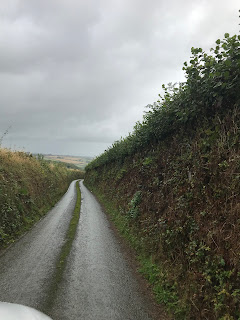
business) heavy goods vehicles using the narrow roads – the roads have always
been narrow, it’s the number of SUVs being driven by uppity, lippy rich-listers
that’s the problem!
The cost of basic essentials like beer, coffee and fuel is
similar to NZ – e.g. in Cotswolds-type popular areas a pint is £6
pounds ($NZ12), a coffee £3.50, and diesel £1.81/litre. Groceries are way cheaper
here than in NZ, and meals out probably also cheaper. In the late 1980s, UK was
>> more expensive than NZ: now, NZ has caught up if not surpassed the UK.

Good to hear that Bourton on the Water is still dreadful in summer and a honeypot for tourists. Only thing going for it was the bakery near the motor museum!
ReplyDelete